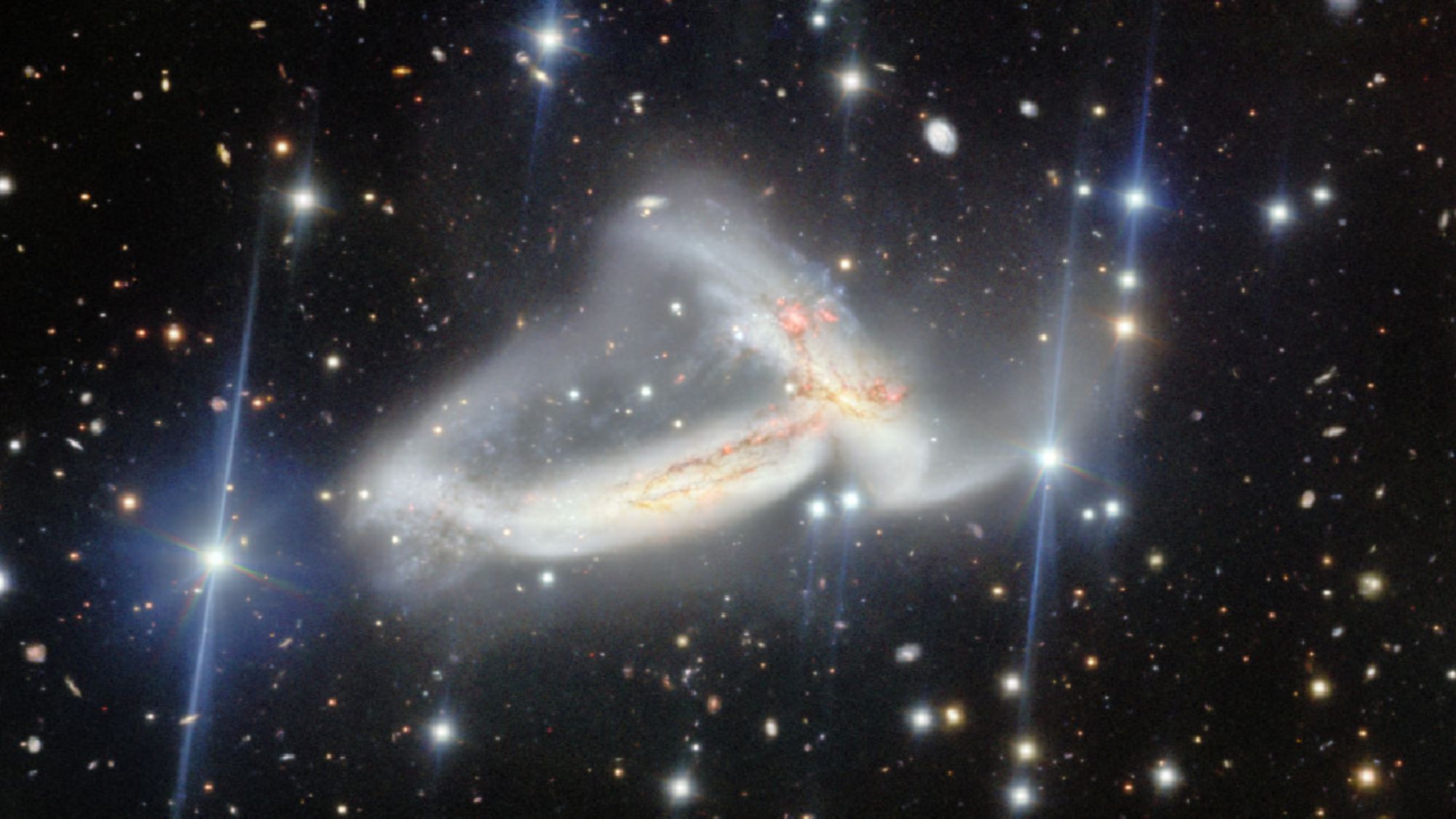
“Astronomy is not just science or spirit; it’s both at the same time.”
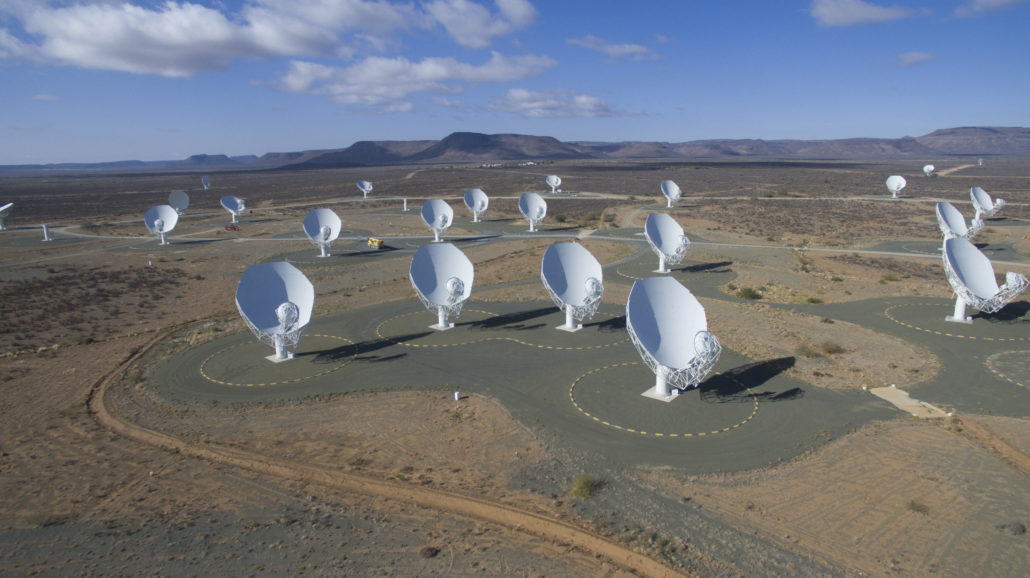
Astronomers have used the MeerKAT radio telescope to detect hydrogen gas located billions of light-years away, from a period when the cosmos was billions of years younger.
Astronomers are closer than ever to confirming the discovery of the first starless or “failed” galaxy, packed with dark matter and gas but with virtually no stars.
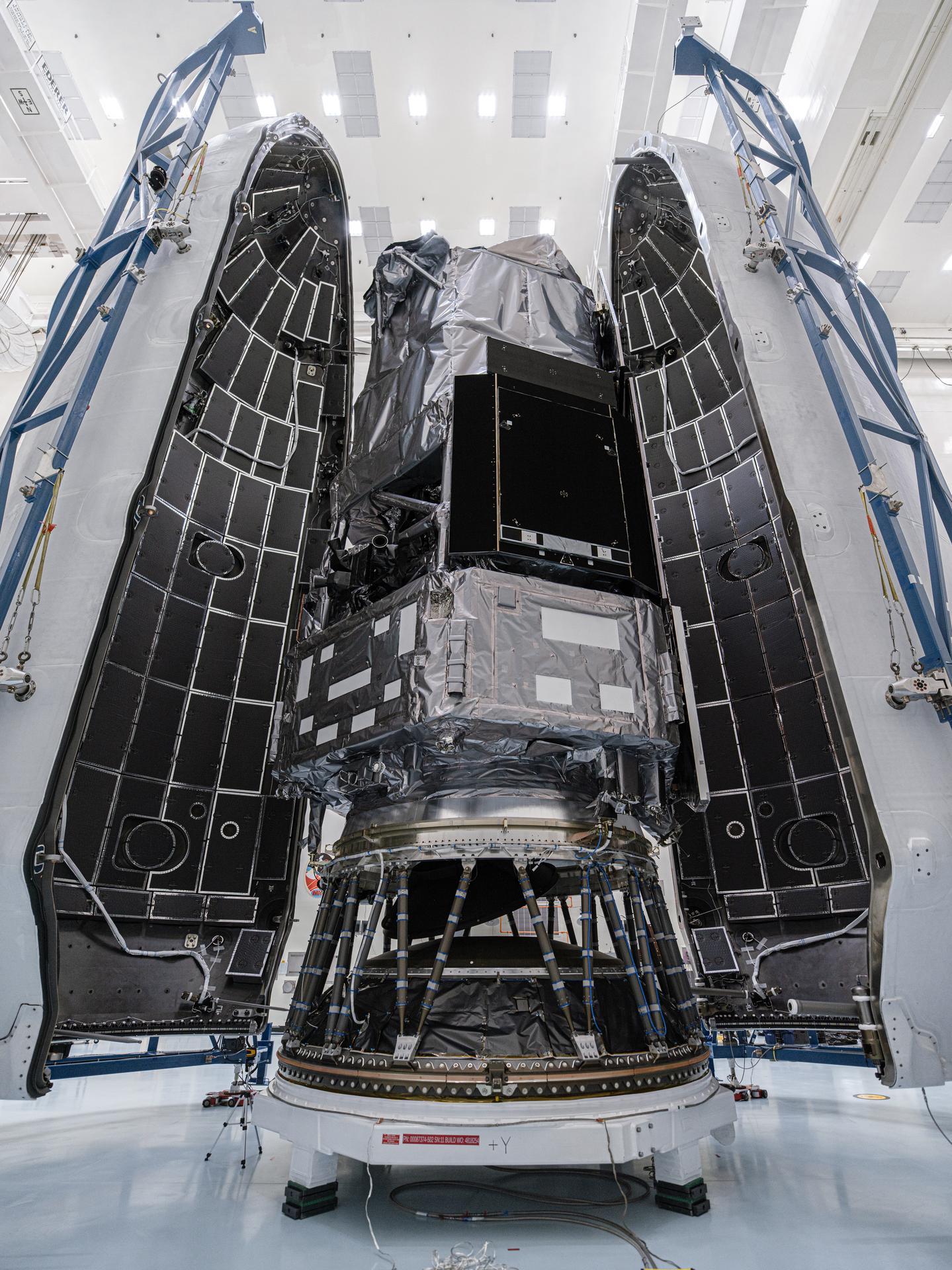
NASA’s Nancy Grace Roman Space Telescope is set to launch at 7:26 a.m. EDT on Sunday, Aug. 30. While you wait to watch the launch, brush up on some key facts about this wide-view mission. To learn more about the Roman mission, visit: https://www.nasa.gov/roman Media contact: Claire AndreoliNASA’s Goddard Space Flight Center, Greenbelt, Md.claire.andreoli@nasa.gov301-286-1940
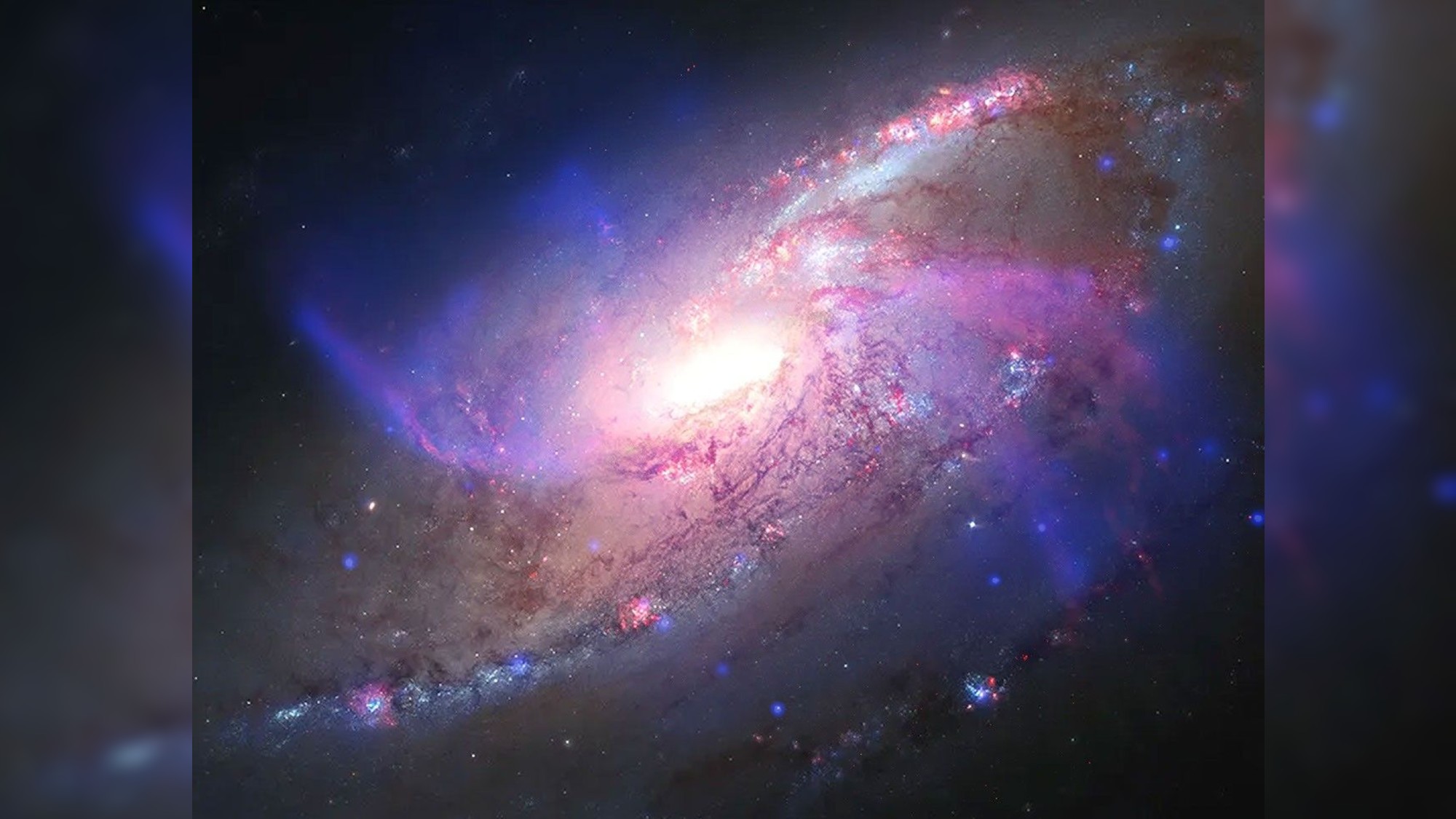
A trio of NASA space telescopes teamed up to capture a gorgeous new look at the glowing spiral galaxy NGC 4258 and its two anomalous extra arms.

Galaxies are like cosmic gems, each with characteristics including size and shape that make them distinct. A new gallery released today from NASA’s Chandra X-ray Observatory and other telescopes displays a collection of galactic images that showcase this variety. Astronomers put galaxies into three main categories: spirals like our own Milky Way with arms emanating […]

The earliest example of the Milky Way cannibalising a smaller galaxy for its growth involved a cosmic meal that left a scar at the heart of our galaxy.
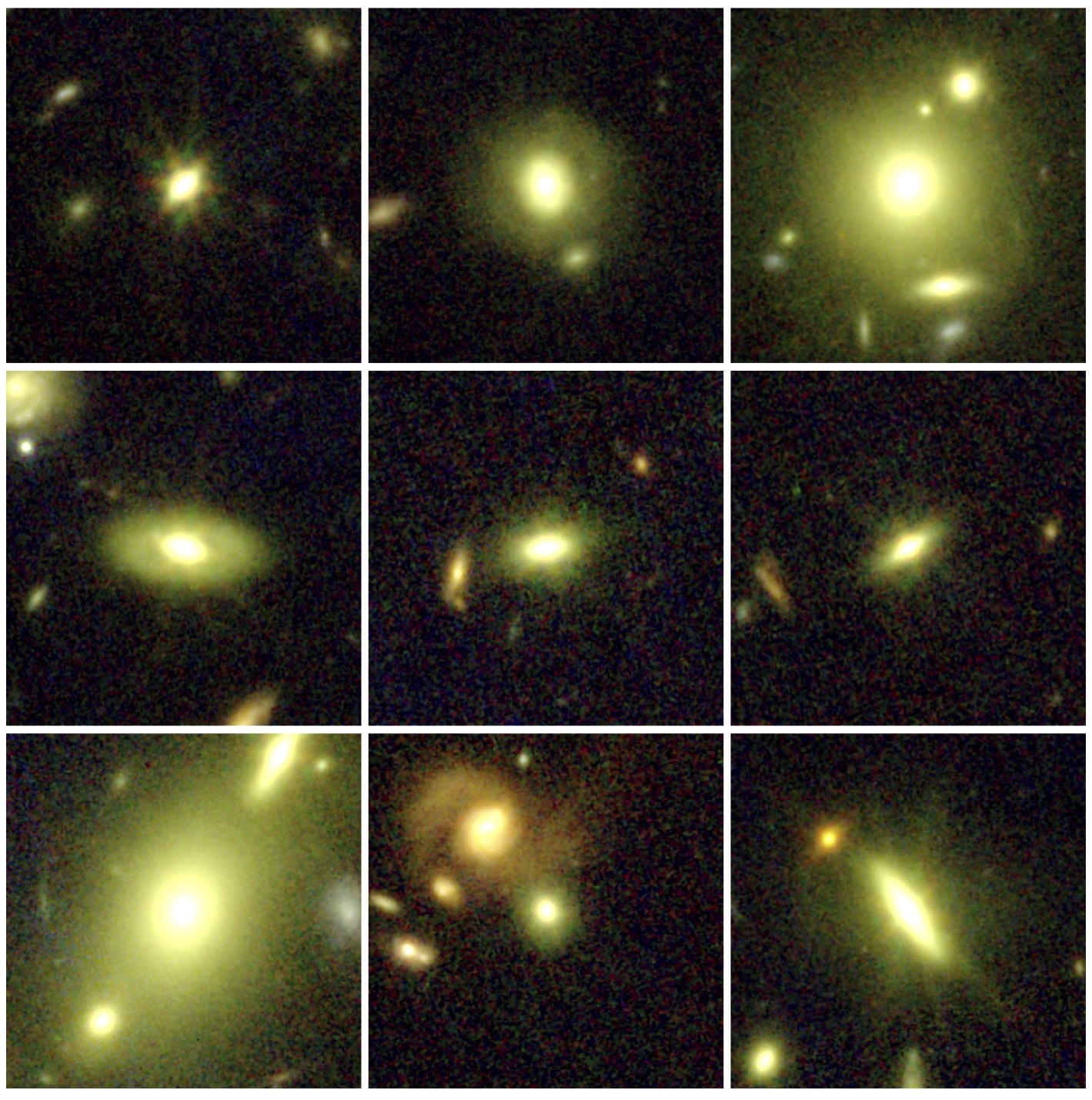
James Webb Space Telescope is finding that between the brightest stars, the cosmic skyscrapers, there are much fainter stars, meaning early galaxies are more massive than we believed.
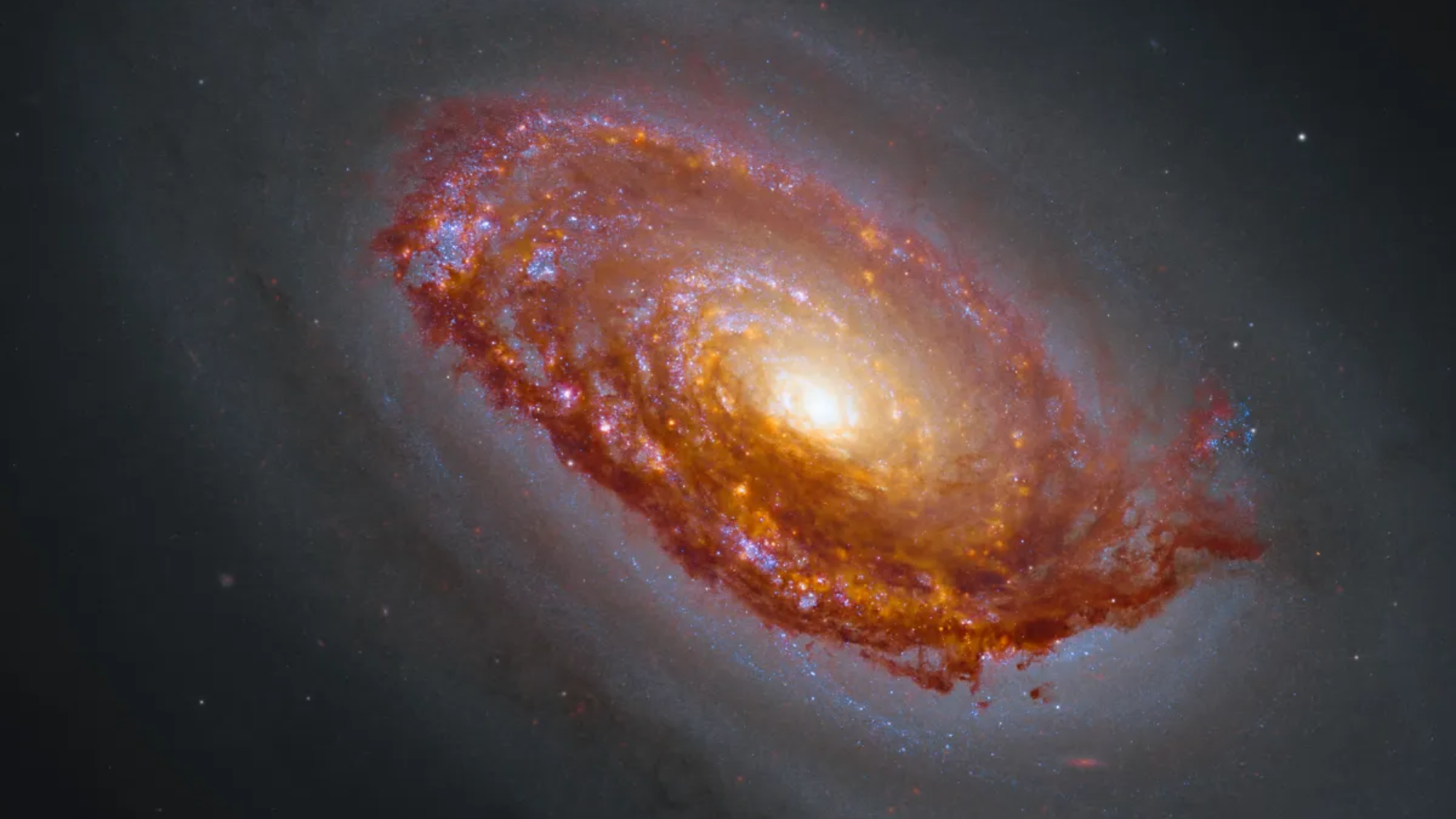
The “Black Eye Galaxy” is captured in a gorgeous new composite image from the Hubble and James Webb space telescopes.
The Milky Way has a secret history of galaxy mergers that we are only now starting to uncover.