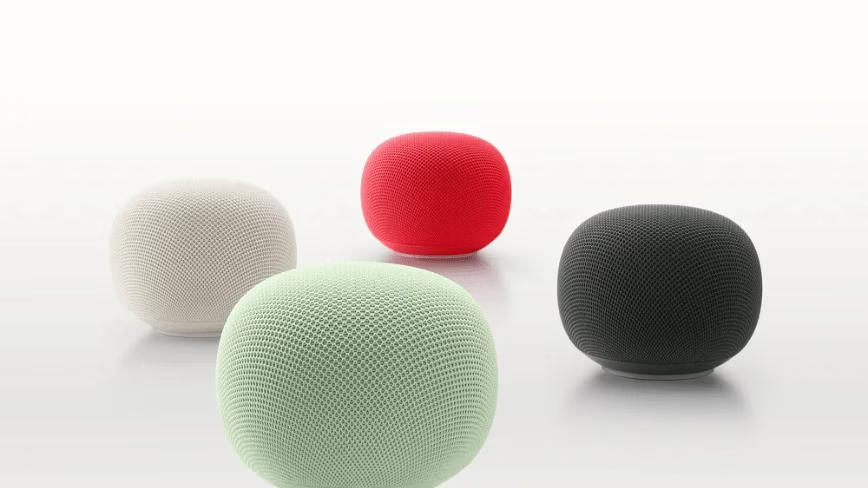
“Connecting a real-life home to an AI agent allows that agent to control devices on your behalf,” Google warns in its developer documentation. “Depending on your agent, connecting it to Home MCP can result in unexpected or even undesired behaviour.” Th…

In early September, two teenagers got into a Waymo, but then ended up in the back of a police car. The robotaxi company said it detected “a violation of our terms of service involving a firearm,” pulled the car over, and alerted emergency services, according to the Los Angeles Times. Police arrested the passengers after […]

“We as a society have the right to at least know that someone is recording,” Polish developer Pawel Szydlowski told Business Insider about his ZuckOff app, which detects nearby smart glasses. Meta now plans to release a pair of smart glasses with no ca…
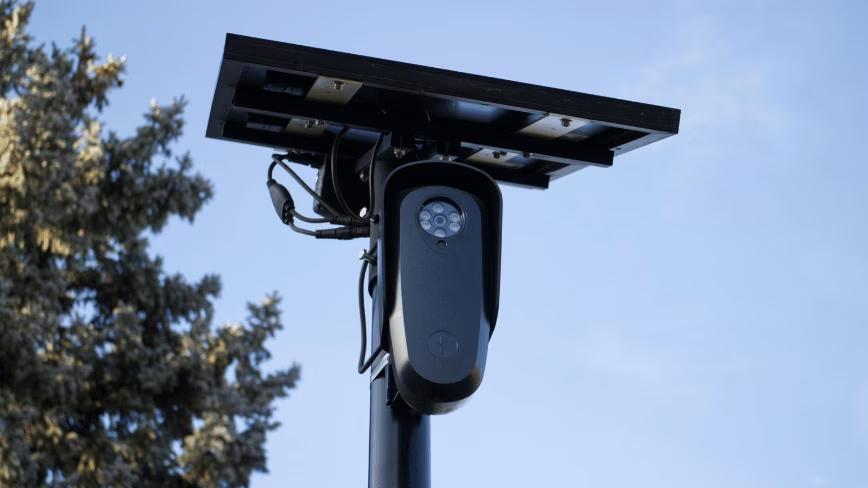
“Why just destroy them when we can reverse engineer them and find the secrets of those spying on us?” one hacker told 404 Media. The hacker belongs to a collective called stegan0gram. The group pulled a Flock Safety camera down from above a roadway and…

“An image appearing photorealistic is no longer sufficient to establish its veracity,” Apple’s security engineers wrote as they set out how the iPhone 18 Pro will prove a photo is real. Apple published the design of Apple Reference Image on its Securit…

“The arrival of AI agents in offensive activity must drive an immediate review of security and data protection models,” wrote Francisco Pérez Bes of Spain’s data protection agency, the AEPD. The AEPD has received its first notification of a personal da…

A cross-party committee of MPs and peers wants a dedicated UK AI law and a single regulator with enforcement powers. On the same day, OpenAI said it would back binding UK rules for the few companies building the most powerful AI. That includes OpenAI i…
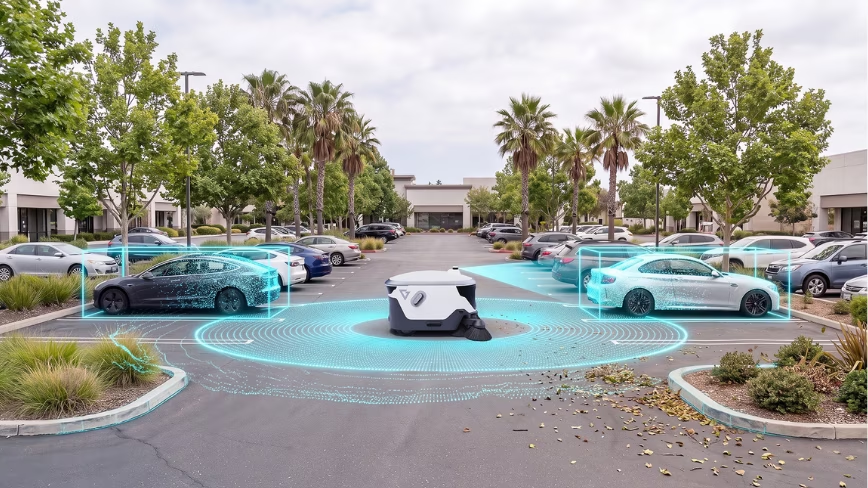
Viabot has raised a $24m Series A led by Walden International, bringing total funding to $43m for its autonomous outdoor sweeping robot. The same machine runs what the company calls soft security, using its navigation sensors to detect loitering and tr…
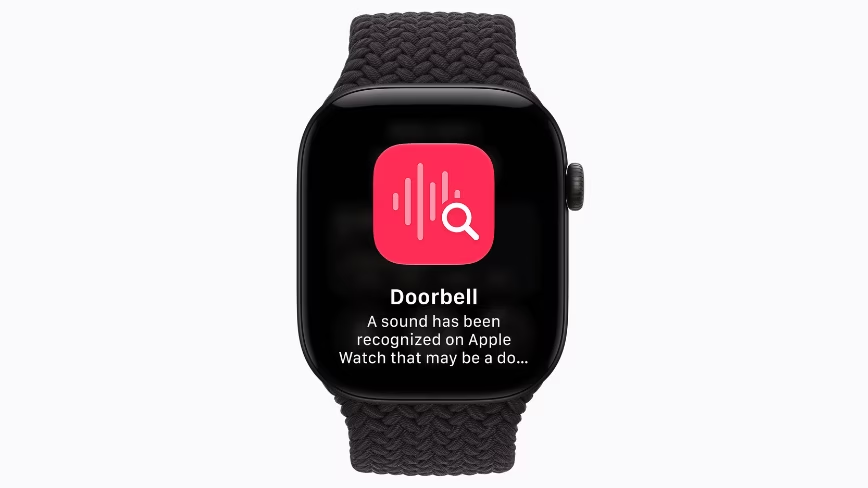
Apple announced Siri Recap and Live Rewind for its new watches on 9 September. The first summarises the conversations a wearer has during the day. The second puts the last 15 seconds of speech on screen as text. Lawyers in four US states now say the fe…

From Florida to Washington state, local governments across the country are canceling their contracts with Flock, the company behind the controversial AI-enabled license plate readers, in response to public outcry. But ending the contracts doesn’t necessarily mean the cameras will come down immediately – or that the information they’ve gathered will be deleted anytime soon. […]