When OpenAI announced on a press call that an internal model had cracked one of mathematics’ hardest open problems, we wrote that nobody had seen the proof. That is no longer true, and what has now been published narrows the claim in ways the announcem…
Google will spend €13bn on data centre infrastructure across four Finnish sites during 2027 and 2028, its largest single investment in Europe, the company announced the plan today. The money covers Hamina, where it has operated since 2009, alongside Ka…
French customerintelligence startup Actionable has raised $10 million in funding to expand itsplatform for predicting customer behaviour and identifying the factors behindit. The round was led by Hi I…

The European Court of Auditors has published two findings that sit awkwardly together. The EU has no reliable picture of the size or structure of its illicit tobacco market. The criminal networks running that market, according to the auditor who led th…

Meta has launched a personal AI agent that will read your email, book your travel, fill in your forms, negotiate on your behalf, and pay for the results with your card. The company that built the world’s largest behavioural advertising business also sa…
London-based deeptech startup Anemo Labs has raised £700,000 in pre-seed funding to develop its technology fordetecting disease-related compounds through smell. The round was led by Zincand SFC Capita…
OpenAI’s latest mathematical milestone has quickly become mired in controversy. Today, the company announced that its agents have solved one of the Millennium Prize Problems, some of the most important open problems in mathematics. Under normal circumstances, that solution would be a huge feather in OpenAI’s cap. But the announcement has been overshadowed by accusations…
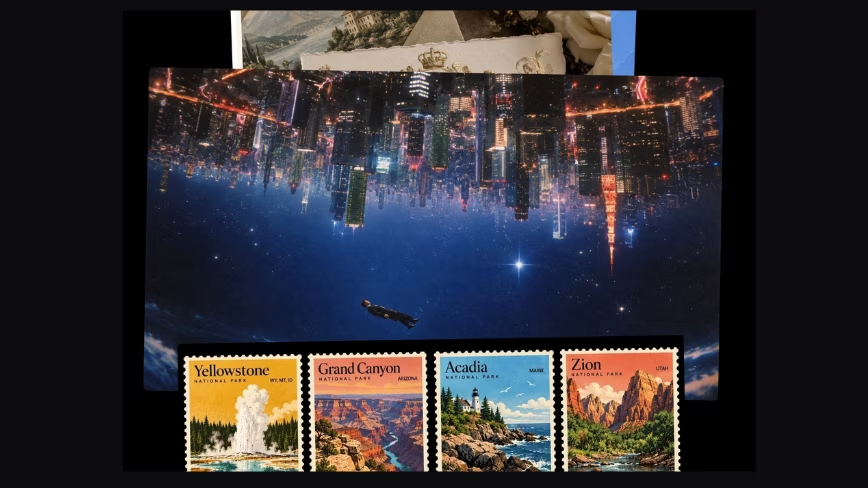
OpenAI released ChatGPT Images 2.5 with two new API models, one of which Adobe has already put into Firefly. The company says more than 3 billion images a week are created across ChatGPT and its image API. The notable additions are interface features r…
OpenAI says an internal model proved that 3D Navier-Stokes can develop a singularity in finite time, using about 10,000 agents over 88 hours. It described the result on a press call and had not published the proof. Tristan Buckmaster and Levent Alpoge,…

Cognition raised over $2bn at a $48bn valuation, up from $26bn in May. Run-rate revenue rose from $492m to almost $900m over the same period. Both rounds price the company at roughly 53 times run-rate revenue, so the multiple did not expand. Cognition …